
Customization
Meloncart gives you full control over your storefront. Write your own HTML, CSS and JavaScript, choose any frontend framework and customize every aspect of the shopping experience.
1 <html>2 <head>3 <title>{{ this.page.title }}</title>4 <link rel="stylesheet" href="assets/css/app.css">5 </head>6 <body>7 {% component 'catalog' %}8 </body>9 </html>Every line of HTML, CSS, and JavaScript is yours to write. No rigid templates, just pure flexibility.
Theme-Driven Architecture
Your store's design and behavior are defined entirely in your CMS theme using pages, partials and layouts. There are no rigid templates to work around. Use any CSS framework, any JavaScript library and any markup structure you like.
Start From Scratch or Use a Theme
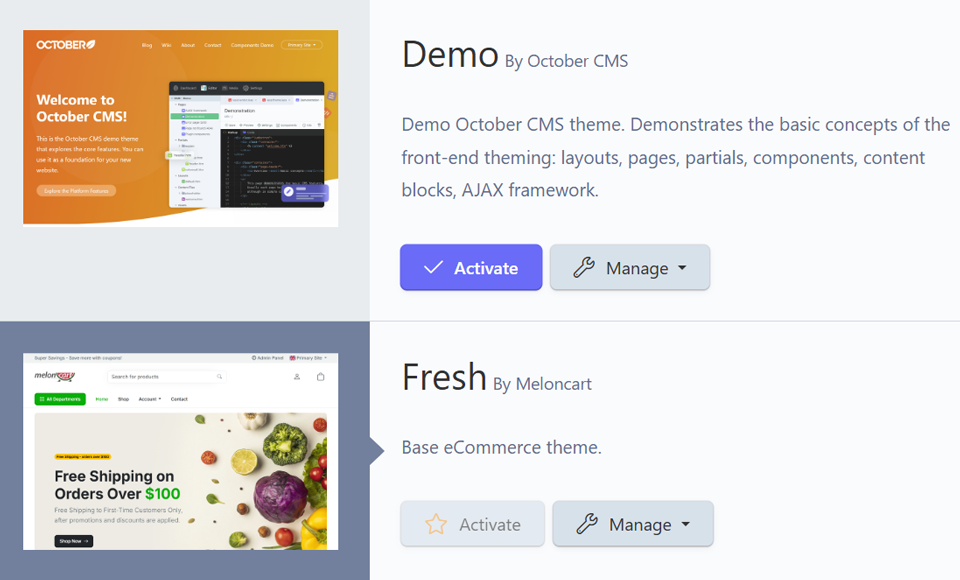
Build your storefront from a blank slate for complete creative control, or start with the included Fresh Theme and customize it to fit your needs. The Fresh Theme provides a fully working checkout, product catalog, customer accounts and more out of the box.
Built-In Content Editing
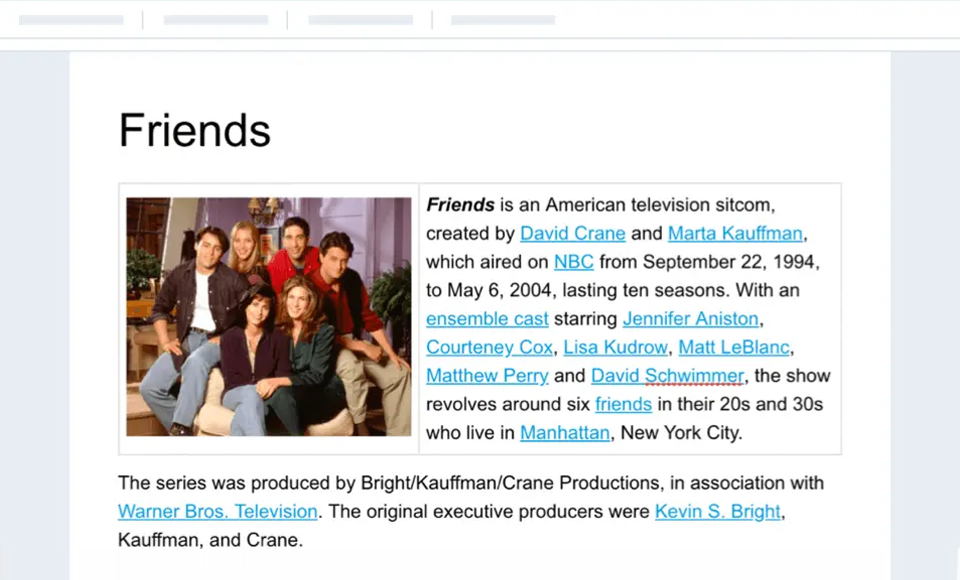
Store owners can update page content, banners and static text directly from the admin panel without touching code. The built-in editor supports HTML and rich text, so day-to-day content changes don't require a developer.
A Clean API
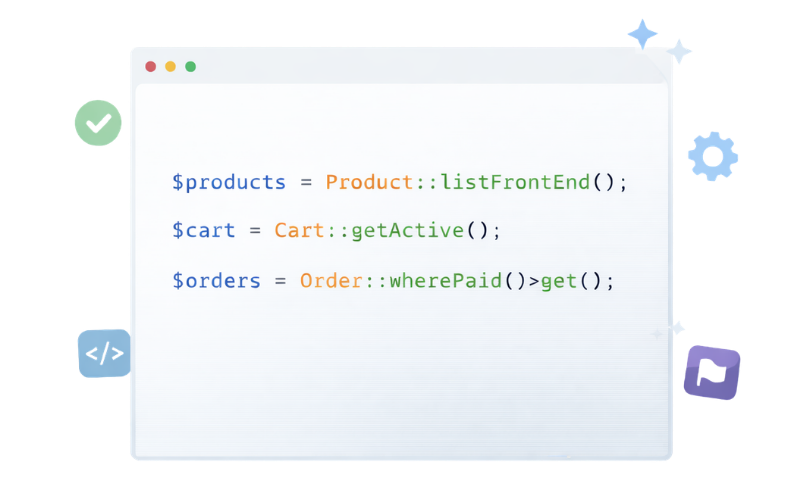
Access products, categories, orders and customers through a well-documented component API. Drop components into your theme templates and use Twig to render data exactly how you want it. The API is consistent and predictable, so building custom storefronts is straightforward.
Events and Hooks
Over 50 event hooks let you customize and extend store behavior from your own plugins. Intercept order placement, modify pricing calculations, adjust shipping rates, trigger external integrations and more without modifying core code.
Extend with Plugins
Add new features by building custom plugins or installing existing ones from the Marketplace. Plugins can add payment gateways, shipping providers, product types, admin pages, frontend components and anything else your store needs.

File-Based Templates and Version Control
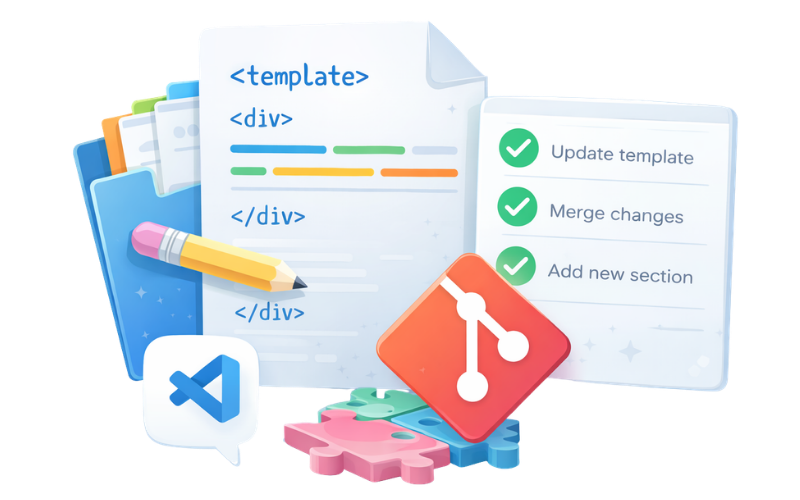
All theme files live on disk as plain HTML, CSS and JavaScript. Edit them with your favorite code editor, track changes with Git and deploy using your existing workflow. No database-driven templates or locked-in editors to work around.